
Santa Clara County Criminal Court Cases
The Superior Court of California, County of Santa Clara hears local felony and misdemeanor cases. It also handles traffic and local ordinance matters. There is no separate city municipal court for these criminal filings. The clerk keeps the official case file, including the complaint, register of actions, hearing entries, orders, disposition, and sentence documents. That file is distinct from the arresting agency's report and the jail's booking entry.
Which clerk holds a file depends on the community tied to the case. Hall of Justice handles San Jose, Milpitas, Los Gatos, Saratoga, Monte Sereno, and Santa Clara. Palo Alto Courthouse serves Cupertino, Mountain View, Palo Alto, and Sunnyvale. South County Morgan Hill Courthouse covers San Martin, Morgan Hill, and Gilroy. Drug Court matters are heard at the Family Justice Center Courthouse. Starting with the correct location prevents a mail request from going to a clerk who does not hold the pleading.
Santa Clara Criminal Courthouse Routes
Santa Clara County spreads criminal work across three main filing counters and one specialty location. The court location directory identifies the departments and cities served. The Santa Clara Courthouse on Homestead Road is temporarily closed, and City of Santa Clara criminal cases route to Hall of Justice despite the similar name.
Hall of Justice
190 W. Hedding St.
San Jose, CA 95110
(408) 808-6611
Criminal departments 23-54
Palo Alto Courthouse
270 Grant Ave.
Palo Alto, CA 94306
(650) 462-3810
Criminal departments 84-89
South County
301 Diana Ave.
Morgan Hill, CA 95037
(408) 695-5014
Criminal departments 105-110
The Family Justice Center Courthouse at 201 N. First Street in San Jose hosts Drug Court. General criminal copy requests still follow the filing courthouse identified in the case record.
Searching Santa Clara County Case Records
The Santa Clara Superior Court Case Information Portal is the first stop for criminal cases filed in 2004 or later. The court allows a case-number search through a defendant name paired with either date of birth or the month and year of filing. Online case information does not mean that each pleading can be downloaded. Use the index to identify the case and filing site, then request the exact document from that courthouse.
- Open the county portal and choose the criminal case index.
- Enter the defendant name with date of birth, or pair the name with the filing month and year.
- Confirm the case number and courthouse before relying on a similar name.
- Review available docket information and note the title and date of each needed filing.
- Ask the filing courthouse for ordinary or certified copies, naming each document clearly.
| Field Label | Type | Required | Notes |
|---|---|---|---|
| Defendant name | Text | Yes | Used in both court-approved index search combinations |
| Date of birth | Date/text | Conditional | Pair with the defendant name |
| Filing month/year | Month/year | Conditional | Alternative to date of birth |
| Case number | Text | For copies | Put it on a mailed request and check memo |
| Document title/date | Text/date | For copies | Name the complaint, docket, sentence, or minute order |
Pre-2004 Santa Clara Criminal Cases
An older case may be absent because the online criminal index begins with filings from 2004. For a pre-2004 Santa Clara County criminal case, visit the correct clerk and search the microfiche index with the defendant name, date of birth, and filing year. A reader who cannot visit may mail or bring a letter asking staff to search specified years. The court may charge a search fee when staff work takes longer than ten minutes.
Once the clerk locates the number, request each item by title and date. Mail requests need a self-addressed stamped envelope and a check payable to Clerk of the Superior Court. If the page total is unknown, the court permits a check marked with a stated amount "not to exceed." Put the case number on the memo line and say plainly when certification is required.
The Superior Court fee schedule gives current copy, certification, and search charges. Its published clerk copy price is $0.50 per page.
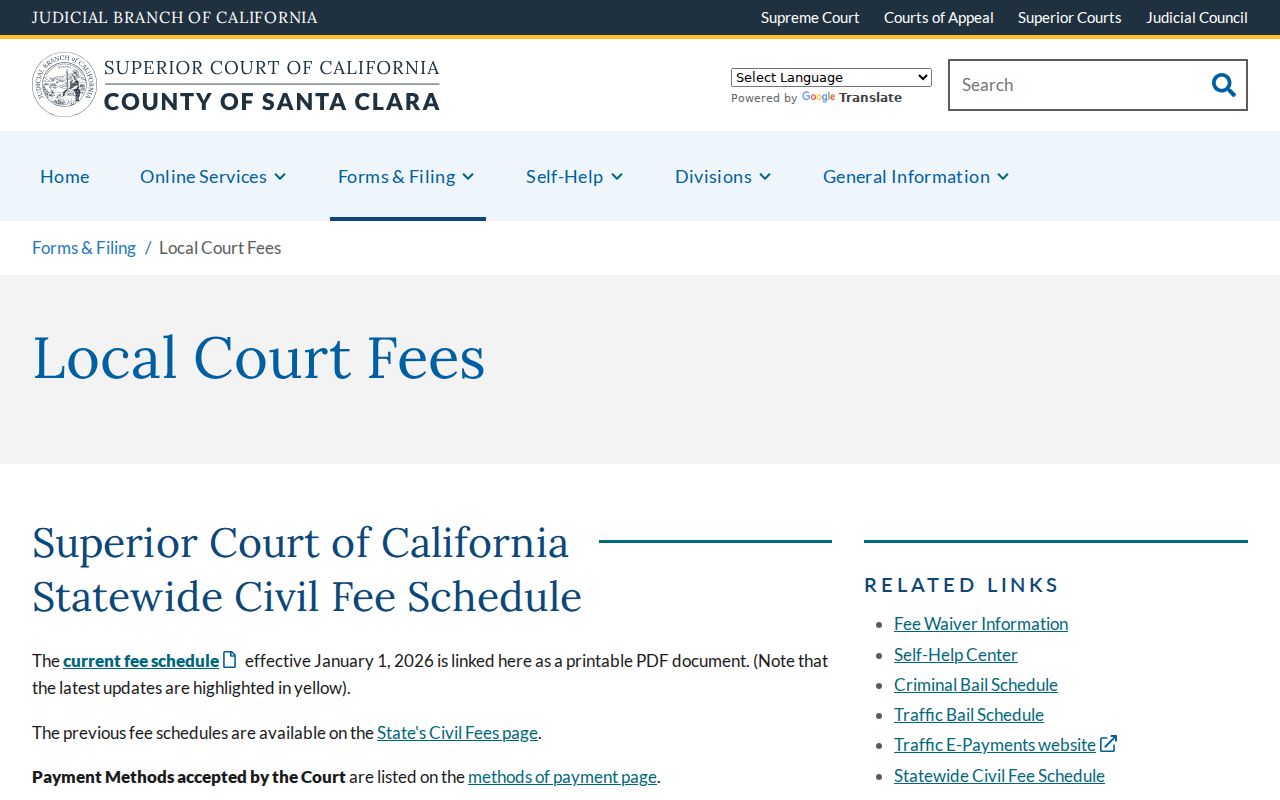
The schedule matters most when a request spans a long docket or needs certified copies, since those services may add charges beyond ordinary pages.
Inside a Santa Clara County Case File
A Santa Clara County criminal case file follows one prosecution, not every arrest linked to a person. The complaint states filed charges. The docket records activity. Minute orders summarize what occurred at hearings, while disposition and sentencing records show the outcome. Ask for the smallest set that answers the question. A complaint and final disposition may be enough to compare initial charges with the result, while a specific hearing dispute may require a dated minute order.
| Case Number & Court | Identifies the file and the clerk who holds it. |
|---|---|
| Charging Document | The complaint, information, or indictment states charges filed in court. |
| Docket Entries | The register of actions lists filings, hearings, and court orders. |
| Hearing Dates | Dated entries connect arraignment, motions, trial, and other events. |
| Disposition & Judgment | Shows whether a charge ended in dismissal, acquittal, plea, or conviction. |
| Sentence & Conditions | Records custody, probation, fines, restitution, or other court terms when public. |
Santa Clara Court Documents Offline
Case information may be visible online even when the underlying document is not. Santa Clara County says criminal filings are not generally available for download. Public users can inspect material that is open online when available or at courthouse access terminals, then order copies through the clerk. This is why a portal result should be treated as an index, not as the whole court file.
The court's criminal records instructions explain the boundary between case information and actual pleadings.
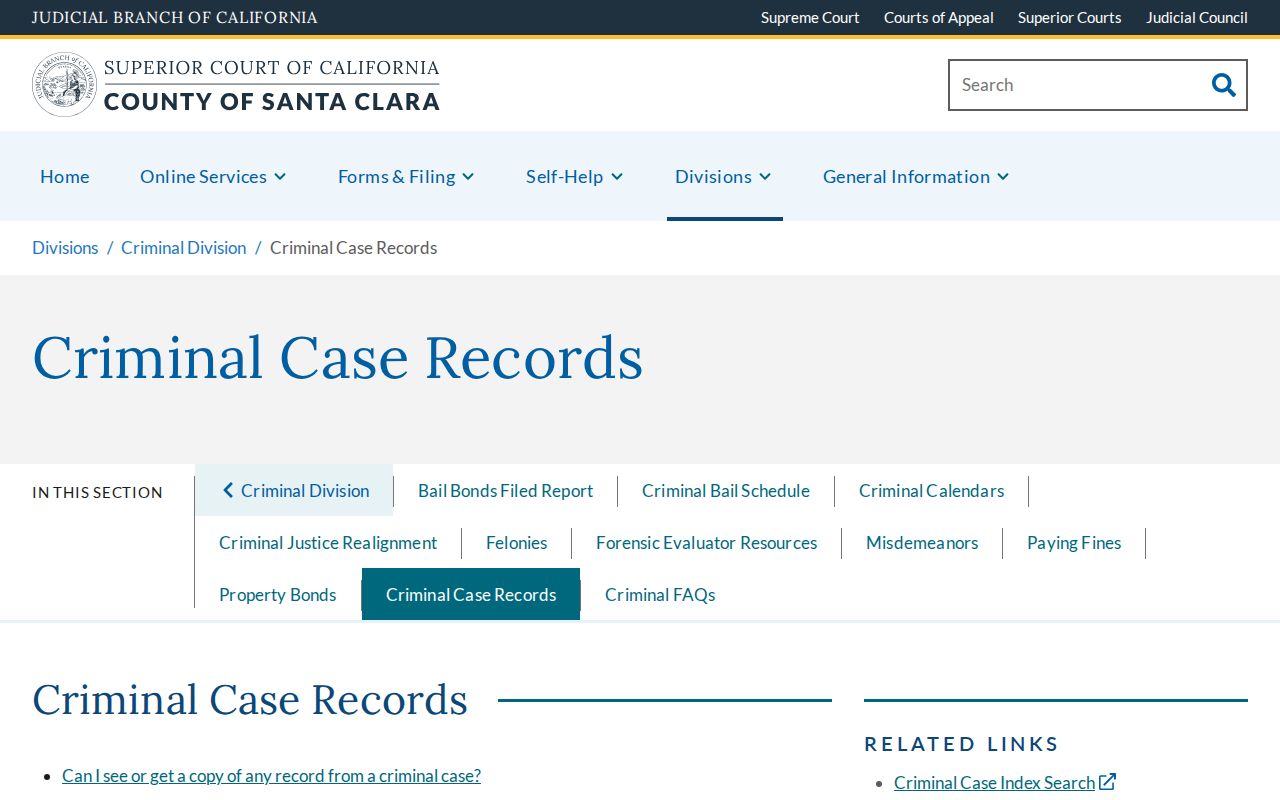
That distinction helps a searcher plan a request by document title instead of assuming a docket screen contains every fact in the file.
The court phone and email directory lists criminal records questions at sscriminalrecords@scscourt.org.
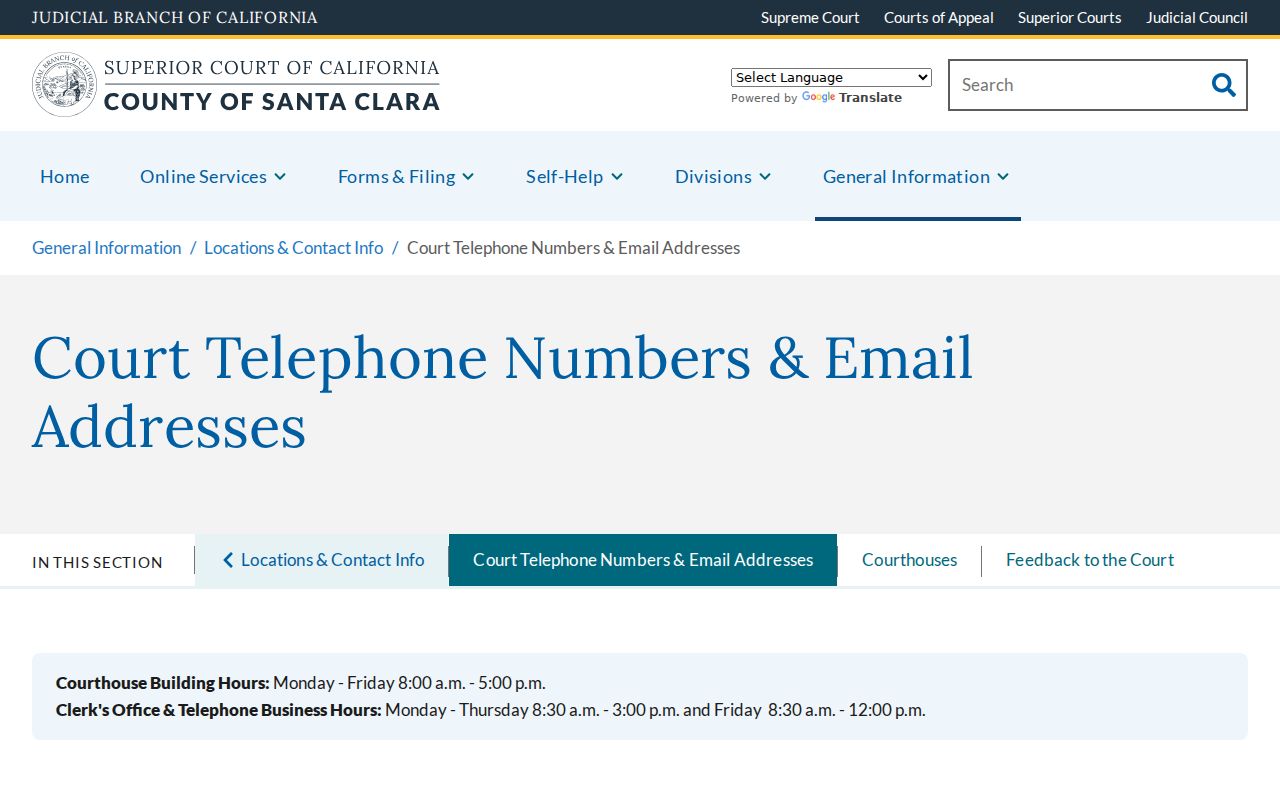
Use that address for records questions, while copy requests still go to the courthouse where the case was filed.
How a Criminal Case Moves
The public case record starts when prosecutors file charges, not merely when police make an arrest. At arraignment, the court states the charges and handles the plea and next dates. Pretrial work can add motions, discovery disputes, amended charges, and settlement hearings. The matter then resolves by plea, dismissal, or trial. A conviction leads to judgment and sentencing. Some events may occur on the same date, while others add several docket entries.
Case flow: Charges Filed › Arraignment › Pretrial › Plea or Trial › Disposition › Sentencing
Read the latest disposition and sentence document rather than inferring the result from the first complaint. Arrest charges can change before filing, and filed counts can be amended or dismissed. For the earlier custody trail, consult the separate Santa Clara County arrest lookup.
Santa Clara Court Record Photos
Effective January 1, 2026, the court's AB 1524 notice says eligible members of the public may photograph electronic court records they are entitled to view in the courthouse for copying. The change does not open sealed files, permit photography in courtrooms or secure areas, or authorize unrelated uses. Ask staff where copying is allowed before taking a device to a terminal.
California Rule of Court 2.503 requires reasonable access to electronic court records while preserving remote-access limits.
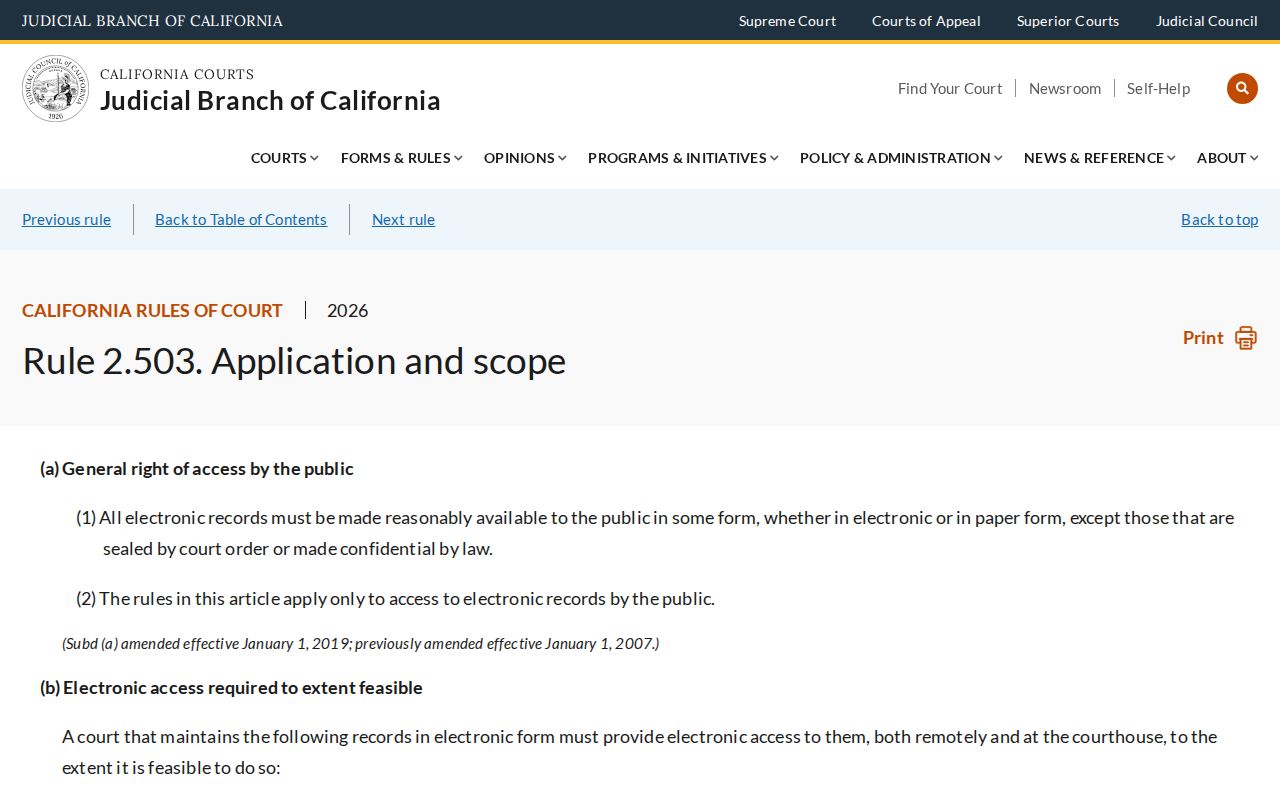
The rule explains why courthouse access can be broader than what a remote portal displays.
Santa Clara County Drug Court
Drug Court is heard at the Family Justice Center Courthouse rather than at the ordinary criminal counters listed for Hall of Justice, Palo Alto, and South County. That specialty setting can explain why a hearing location differs from the branch first associated with a criminal case. The Superior Court remains the records custodian, and the case number still anchors requests for the complaint, docket, minute orders, disposition, or sentence.
Check the latest docket entry before traveling. A specialty calendar can move a hearing without moving every paper file or changing where a copy request belongs. The criminal clerk can confirm the right records route when the portal shows the Family Justice Center as the hearing site.
Case Record Access and Restrictions
Public access has firm limits. Santa Clara County identifies arrest reports or papers containing victim contact details, probation reports, domestic violence protective orders, own-recognizance reports, criminal-history information, and financial or medical information as unavailable for public inspection or copying. Juvenile, sealed, and confidential matters follow separate rules. A blank portal result can therefore reflect age, location, sealing, or access rules rather than prove that no case exists.
California Rule of Court 2.400 places inspection through the clerk and generally keeps original records in court custody.
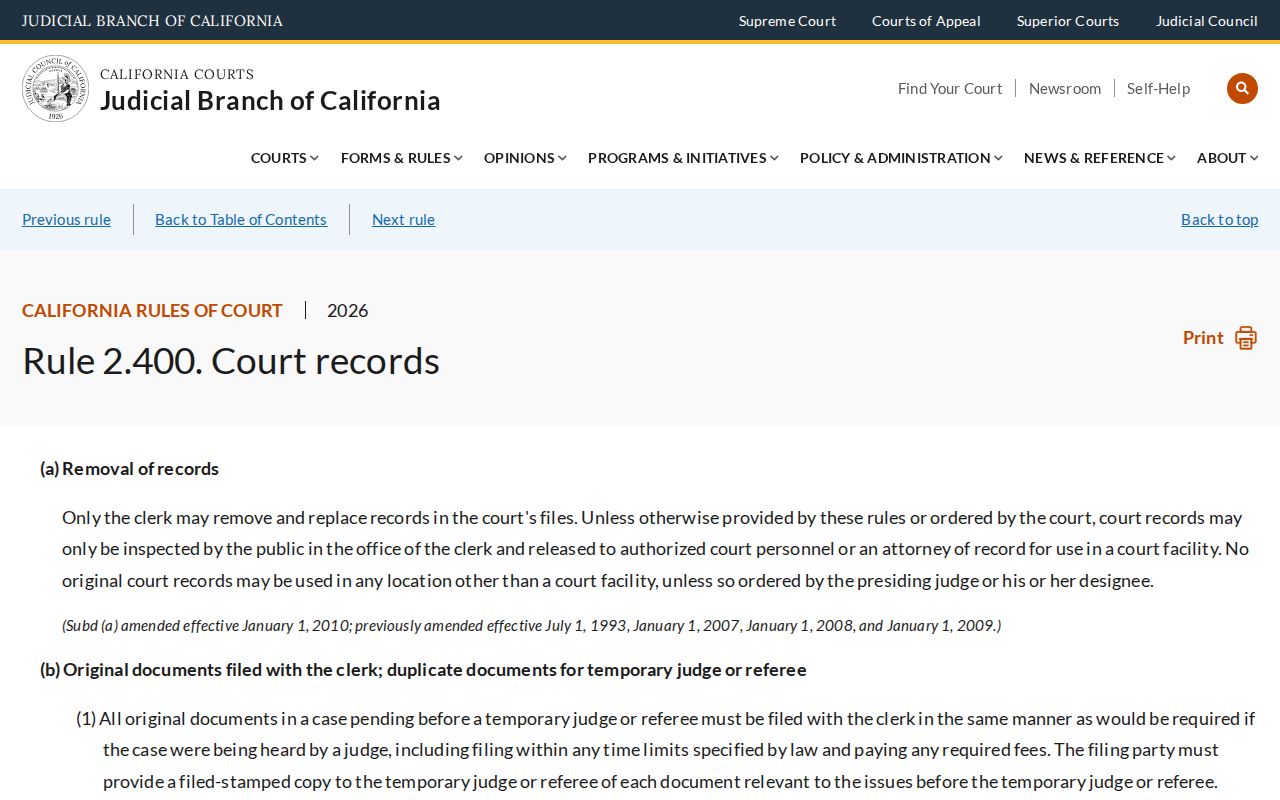
Copies provide the usable record while the original stays with the Superior Court.
The court location page shows which branch handles each community.
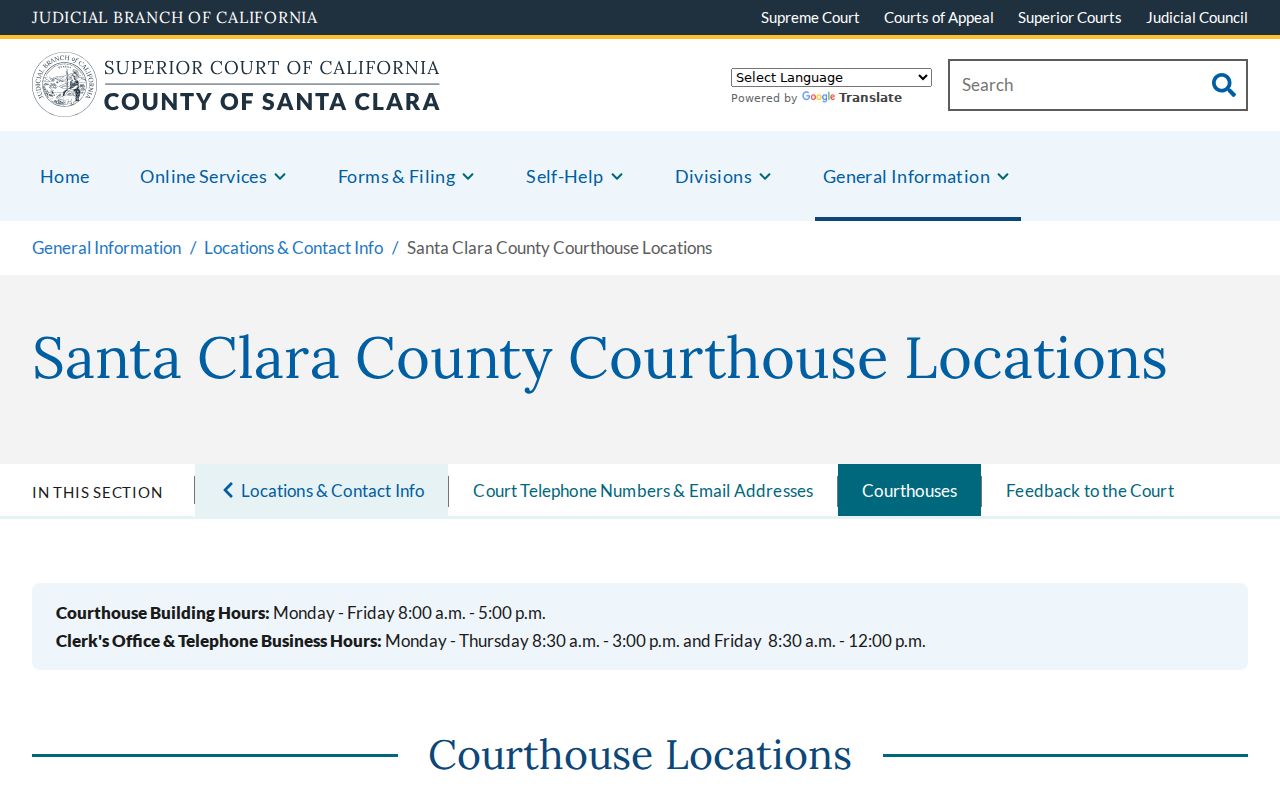
When a record does not appear remotely, contact the proper branch with the defendant name, birth date, and likely filing year.