
Sex Offender Checks in Santa Clara County
The California Megan's Law Website is the main public channel for a Santa Clara County sex offender search. The California Department of Justice operates it and updates the site daily with information supplied by local registering agencies. Searchers can use a name, address, city, ZIP code, county, park, or school. The result is a safety resource, not a complete criminal history. Court records hold the case proceedings, and California DOJ Record Review is the route for a person reviewing their own fingerprint-linked history.
The Santa Clara County Sheriff's Records Division handles registration appointments for people within its jurisdiction. City police departments also register residents in their areas. A correction to a public profile starts with the local registering agency, which verifies the record and sends updates to DOJ. That split matters: DOJ publishes the statewide database, but the local agency confirms current registration facts.
The official registry landing screen shows the public entry point.
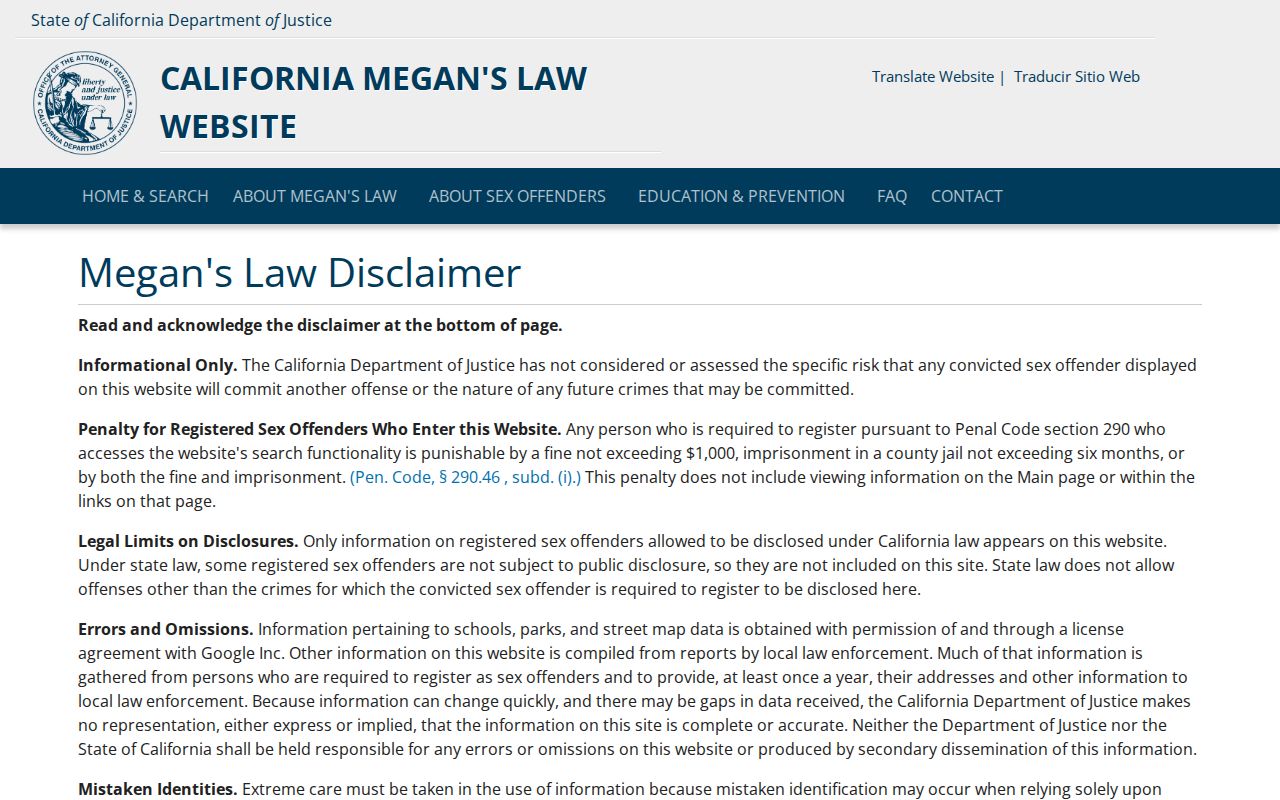
Its conditions-of-use step comes before any person or map search.
Santa Clara Registry Posting Categories
California does not publish every registrant in the same way. Penal Code section 290.46 creates full-address, ZIP-code-only, and non-disclosed categories. The result depends on the qualifying offense and the statute's posting rules, not simply the person's tier. Some people must register but cannot legally appear on the public site. Others may have a ZIP code shown without a home address.
This is why a Santa Clara County registry result must be read with care. “No match” does not prove that no registration duty exists. It only means the search did not return a public posting under the entered terms. Try spelling variants, a broader map area, and nearby cities before drawing a conclusion. For a concern about compliance or an apparent error, contact the police department or sheriff responsible for that address.
The DOJ Megan's Law FAQ explains these limits in context.
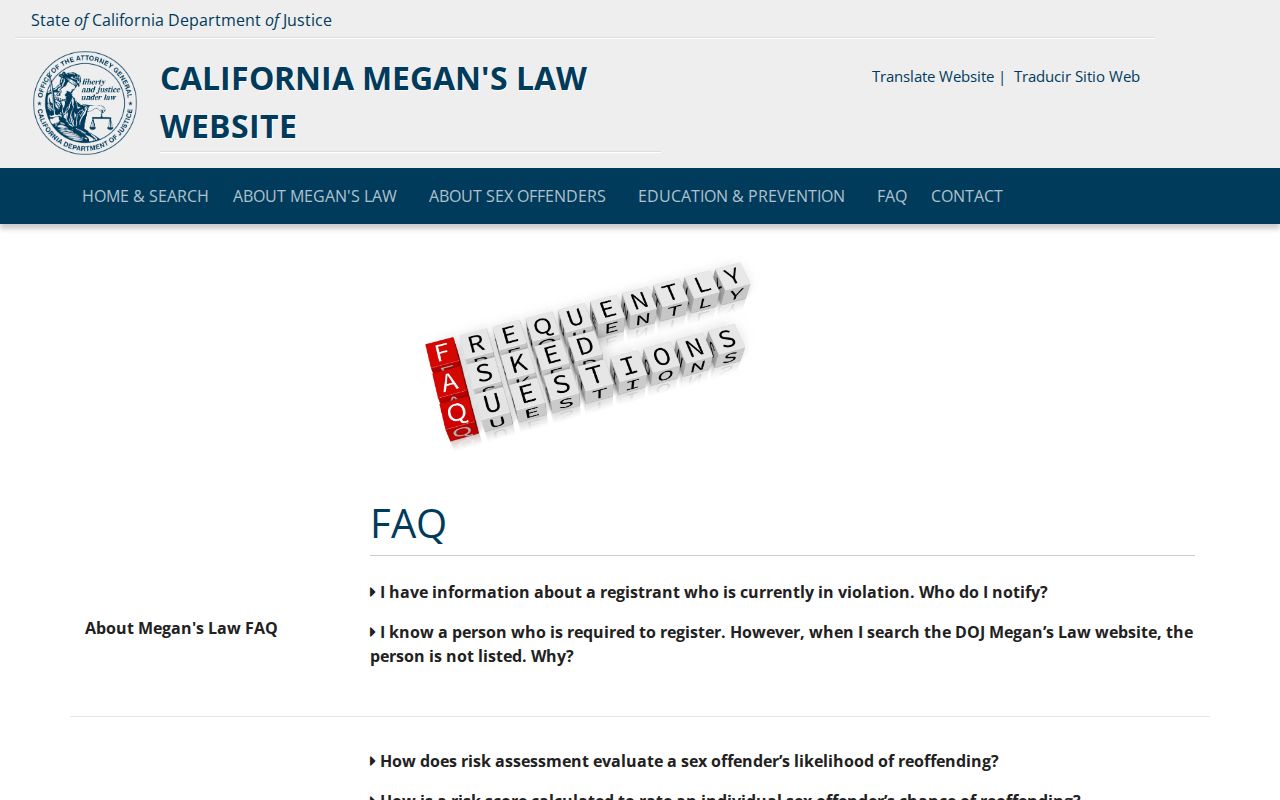
That official explanation helps distinguish a public posting rule from the broader duty to register.
Note: Registry offense information is a focused public-safety disclosure, not a complete list of arrests, charges, dismissals, or court outcomes.
How to Search California Megan's Law
Open the official California Megan's Law Website and accept its disclaimer. A person search can use a last name alone or a first-and-last-name combination. A map search can start with an address, city, ZIP code, county, park, or school. The broad choices are useful in Santa Clara County because city boundaries and nearby addresses can produce different map views.
- Open the registry and read the conditions of use before selecting Continue.
- Choose a name search or a geographic search by address, city, ZIP code, county, park, or school.
- Compare the listed photo, physical description, and location information rather than relying on a name alone.
- Open the profile and read the offense, registration, and last-updated information with the posting limits in mind.
| Field Label | Type | Required | Notes |
|---|---|---|---|
| Last name | Text | Yes for name search | May be used without a first name. |
| First name | Text | No | Narrows a last-name result. |
| Address, city, or ZIP | Text | One place term | Builds a geographic map search. |
| County | Select | No | Choose Santa Clara for a county view. |
| Park or school | Map search | No | Supports searches near a named place. |
Santa Clara Registration Appointments
Registration is a local law-enforcement task even though DOJ runs the public site. The Santa Clara County Sheriff's Records Division lists registration by appointment at 55 W. Younger Avenue in San Jose. Its main records line is 408-808-4705. A person should contact the agency with jurisdiction over the residence rather than assume every county resident reports to the sheriff.
California's update schedule varies. Annual registrants generally update within five working days of their birthday. Transient registrants update every 30 days, and sexually violent predators update every 90 days. A change of residence or other required fact can trigger a separate reporting deadline. These duties explain why local verification and prompt agency reporting affect what the public sees.
Sheriff's Records Division
55 W. Younger Avenue
San Jose, CA 95110
408-808-4705
Registration service is by appointment.
The DOJ summary of California registration law describes the main update duties.
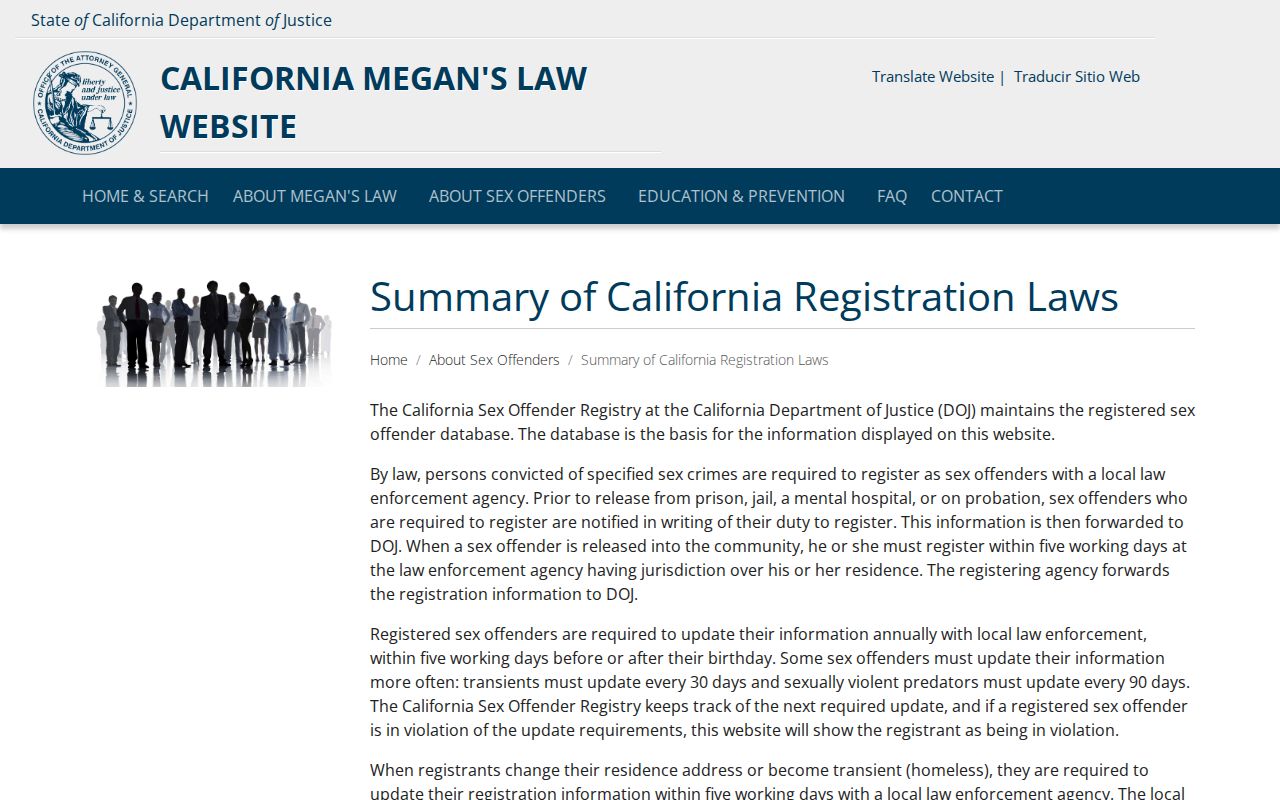
The state summary connects the local appointment process to California's reporting rules.
Inside a Registry Profile
A public profile combines identity, location, offense, and registration facts that DOJ is authorized to post. Match several fields. Names may be shared, photos age, and the location display may be a full address or only a ZIP code. The profile's offense description concerns the registration basis; it does not narrate every event in a person's criminal record.
| Name and aliases | Identifying names published by DOJ. |
|---|---|
| Photo and description | Photo plus physical traits used to distinguish similar names. |
| Location | Full address, ZIP-code-only location, or no public posting, as the law permits. |
| Offense and statute | The registrable offense information authorized for display. |
| Tier | California's minimum registration tier when shown. |
| Registration details | Available status and update information supplied through registering agencies. |
Daily Santa Clara Registry Updates
DOJ says the Megan's Law site is updated daily. That does not mean every local change appears the instant it occurs. A registrant first reports to the responsible police or sheriff's agency. The agency checks the information and sends it into the state system. DOJ then processes the public-facing update under section 290.46.
If a Santa Clara County profile appears wrong, write down the exact field and contact the local registering agency. Do not confront the person shown. The agency can check its registration file and transmit a correction when needed. An address concern involving San Jose belongs with SJPD; an address in sheriff jurisdiction belongs with the Sheriff's Office. This path is more useful than treating a public screenshot as a permanent record.
The registry's official statistics page provides statewide context.
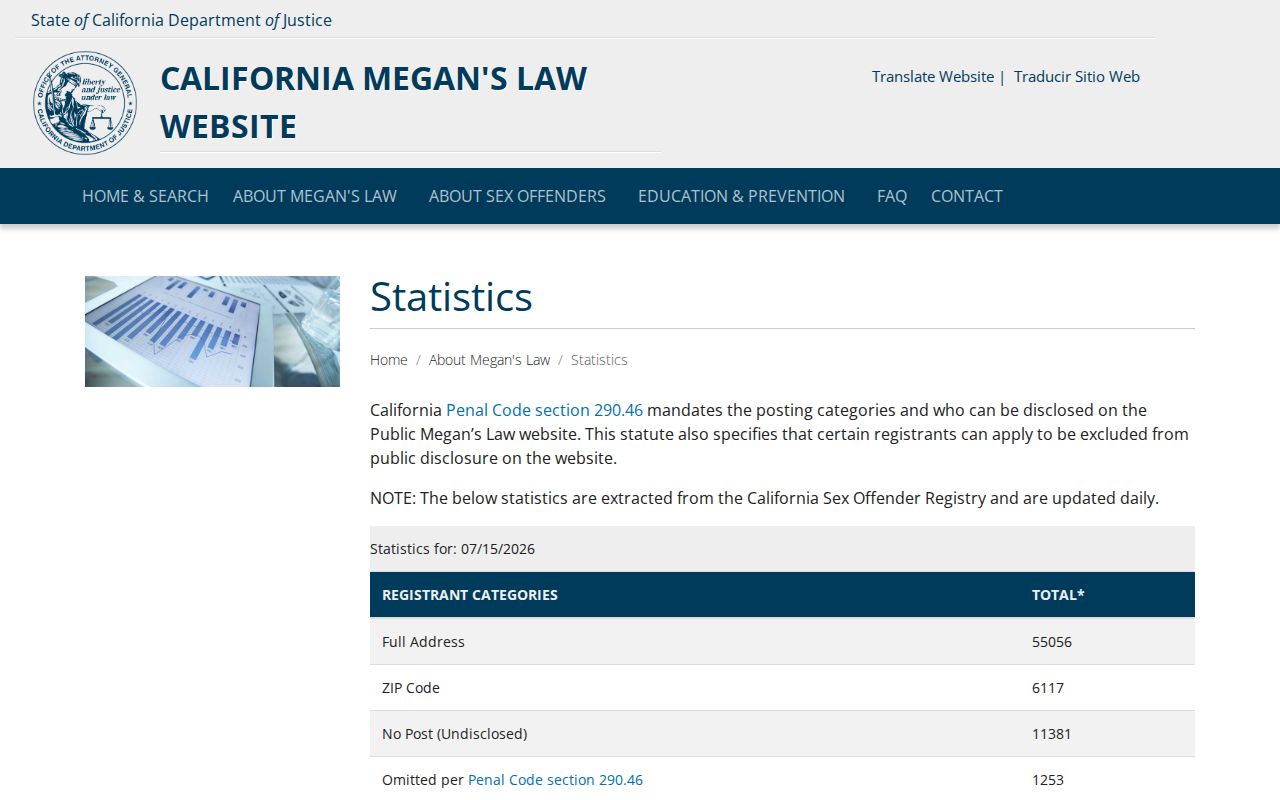
Statistics describe the statewide system, while a local profile remains subject to its own posting and update history.
California Registration Levels and Requirements
California uses three tiers. Tier 1 has a minimum ten-year registration period, Tier 2 has a minimum twenty-year period, and Tier 3 generally requires lifetime registration. The minimum period does not itself remove a person from the registry. Eligible people must use the statutory petition process, and the court evaluates the request. Posting category and tier are also distinct, so tier alone does not tell a searcher whether a full address will appear.
| Level / Tier | Duration | Verification Frequency |
|---|---|---|
| Tier 1 | Minimum 10 years | Usually annual, with added updates after required changes |
| Tier 2 | Minimum 20 years | Usually annual, with added updates after required changes |
| Tier 3 | Generally lifetime | Usually annual; some classifications update more often |
Santa Clara and National Searches
The National Sex Offender Public Website searches participating jurisdictions across the country. It is useful when a name or safety concern crosses state lines. California Megan's Law remains the better source for California-specific posting rules, map tools, and explanations. Search both when a person may have lived outside Santa Clara County.
NSOPW does not create a new national criminal-history file. It brings together public registry records supplied by jurisdictions. Each source still controls its own display rules and corrections. A result should be checked against the originating registry, especially when location or status may have changed.
The national search interface shows that cross-state layer.
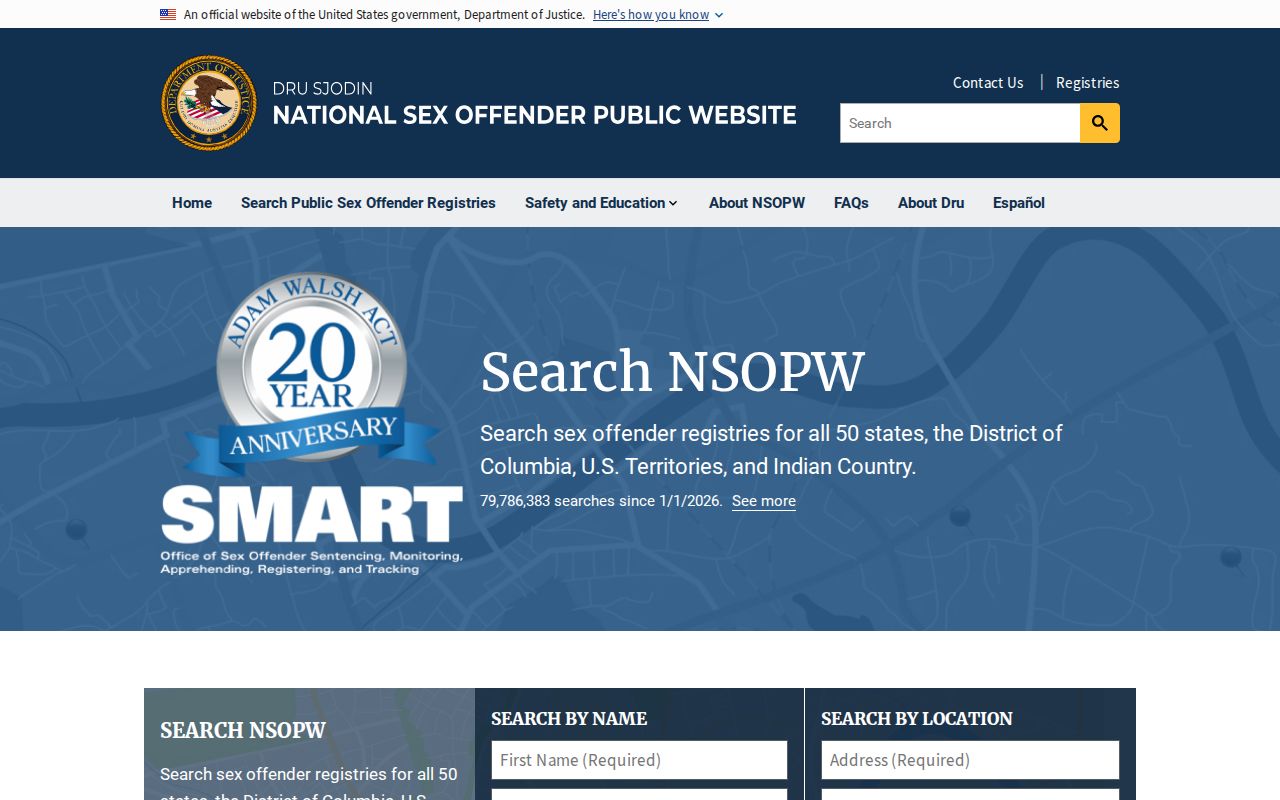
The national tool broadens geography but does not override California's source record.
Santa Clara Registry Versus Case Files
A registry profile answers a narrow safety question: what public registration information may be disclosed now? A criminal court file answers different questions about the complaint, hearings, pleas, disposition, and sentence. Those records are held by the Superior Court. An arrest record begins with the arresting agency and may exist even when no charge is filed.
For a registry-qualifying case, use the profile to understand current public registration facts and the Santa Clara County criminal court cases page to understand how to find the court outcome. Do not infer guilt on a new allegation, current custody, or a complete history from the registry alone.
Community Notification and Lawful Use
California publishes Megan's Law information for public protection. Residents may use it for family safety plans, neighborhood awareness, and informed contact with law enforcement. The data is not an invitation to confront, follow, threaten, or shame anyone. Verify location and identity through official channels, and call emergency services only for an immediate threat or crime in progress.
Misuse is a crime: Penal Code section 290.46 restricts use of registry information. Harassment, threats, intimidation, or other criminal misuse can lead to penalties.
The registry's misuse-penalties notice states the warning directly.
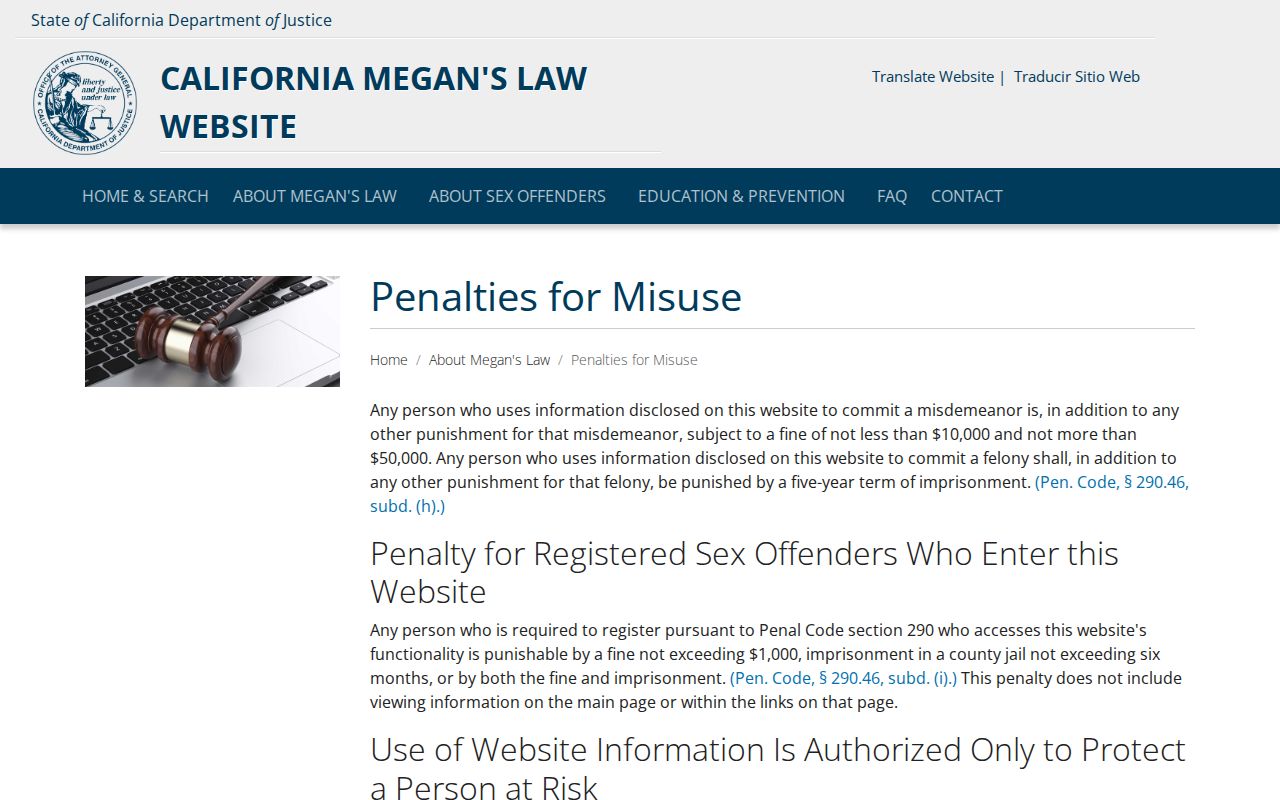
That warning is part of responsible community notification, not a minor condition hidden from searchers.